Unlock the full potential of Wavestore v6.52 -view our launch presentation today and explore the latest innovations in video management.
For years, physical security systems existed in a vacuum. A dedicated security team managed the cameras and doors, and the network was largely air-gapped from the rest of the enterprise. That era is definitively over. Today, enterprise IT departments are increasingly absorbing physical security into their domain, and they are auditing these systems with the exact same rigorous cybersecurity standards applied to cloud infrastructure and data centers. The people writing the checks and signing off on the deployments are no longer just facility managers; they are IT Directors and Chief Information Security Officers (CISOs).
This shift in procurement power fundamentally changes the sales cycle for Security Integrators (SIs). If your proposed access control architecture relies on outdated, unencrypted communication protocols, you risk losing enterprise bids to IT-centric competitors or failing mandatory security audits. Mastering modern standards is no longer just about ticking a compliance box—it is a critical competitive advantage for winning and retaining large-scale, high-margin projects.
Despite being decades old, the Wiegand protocol remains surprisingly common in legacy access control deployments. The problem is that Wiegand is inherently insecure by design. It transmits credential data in plain text without any encryption or authentication. Anyone with a basic skimmer or a multi-meter can easily intercept the credential data as it travels from the reader to the controller, creating a massive vulnerability right at the edge of the network. For an IT department evaluating a new system, identifying Wiegand in the specification is an immediate red flag that will halt the deployment process.
The Open Supervised Device Protocol (OSDP), specifically with Secure Channel Protocol (SCP) enabled, is the required standard for modern, secure device communication. Developed by the Security Industry Association (SIA), OSDP replaces the vulnerable one-way communication of Wiegand with a robust, two-way encrypted channel that definitively satisfies strict IT compliance audits.
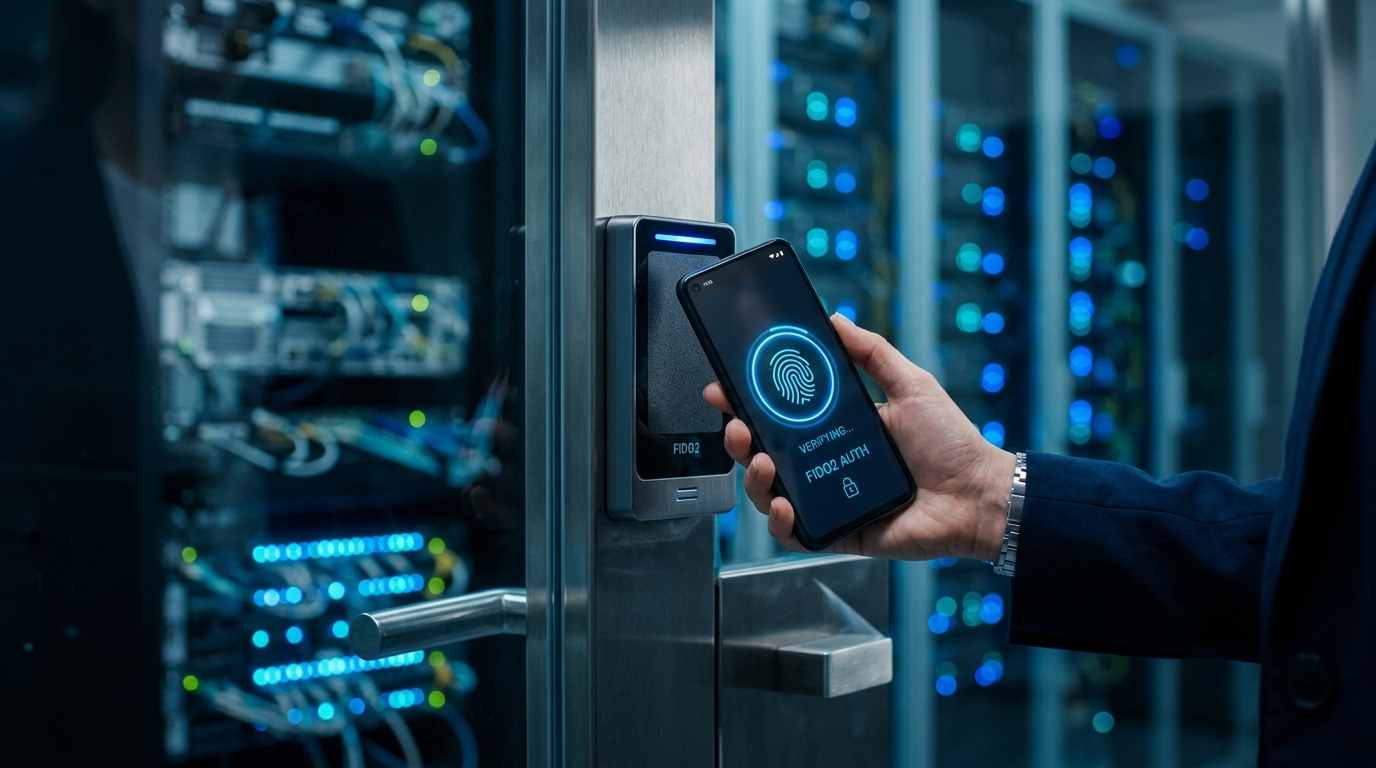
As IT departments push aggressively for zero-trust architectures, legacy proximity cards (like 125 kHz prox) and basic passwords are no longer sufficient for enterprise environments. These credentials are easily cloned, shared, or stolen. Enter FIDO2. Originally developed by the FIDO Alliance to eliminate passwords for web applications and logical access, FIDO2 is an open standard that utilizes public-key cryptography to provide highly secure, phishing-resistant, multi-factor authentication.
In the context of physical access control, FIDO2 bridges the historical gap between logical and physical security. It allows enterprises to use a single, highly secure credential—such as a smartphone biometric enclave, a YubiKey, or a smart card—for both logging into the corporate network and unlocking physical doors across the facility.
SIs who understand how to natively deploy FIDO2-compliant physical access control systems are positioned to solve a major operational headache for enterprise IT: unified identity management. When you can speak confidently about public-key cryptography and passwordless authentication, you immediately transition from a traditional hardware installer to a trusted technology consultant.
"Mastering standards like FIDO2 and OSDP isn't just about ticking compliance boxes—it's your competitive advantage to winning larger enterprise deals."
Adopting these stringent standards requires a system architecture capable of genuine flexibility. Proprietary, closed ecosystems intentionally restrict your ability to integrate best-of-breed components. If a legacy VMS or access control vendor locks you into their specific readers or proprietary controllers, your ability to flexibly meet an IT department's strict OSDP or FIDO2 requirement is severely compromised.
Hardware independence is critical for modern integrators. You need the autonomy to select the exact readers, controllers, and identity management platforms that align with the end-user's specific compliance and operational needs. A closed system forces you to say "no" to the client's IT department; an open platform allows you to design a tailored solution that says "yes."
At Wavestore, our engineering philosophy is built on Hybrid Resilience. We provide the unified intelligence platform for organizations that demand uncompromised live performance today and seamless edge-to-cloud convergence tomorrow.
Through WaveFusion, we deliver a modern unified interface that bridges edge infrastructure and the AWS cloud into a single operational plane. Crucially, our open-platform architecture ensures you are never locked into proprietary hardware. Whether you are deploying high-security OSDP readers at the edge or integrating with a FIDO2-compliant identity provider, Wavestore gives you the control to design a system that passes the IT audit without sacrificing operational continuity. We keep the high-bandwidth video local for data sovereignty, while unifying access control metadata in the cloud for global visibility.
The convergence of IT and physical security is accelerating. Integrators who fluently navigate standards like OSDP and FIDO2 will command the enterprise market, while those who cling to legacy protocols will be systematically phased out. Partner with a vendor that actively supports your architectural independence and provides the hybrid resilience your clients demand.
Book a migration consultation with our technical team to see how WaveFusion simplifies secure, standards-based enterprise deployments.

Solutions for a world we can't yet see. Discover v6.52 features helping people and businesses.